
When someone finds a lump on their neck, their first reaction is often fear. Finding information about cancer on neck lymph nodes can be alarming, but it is also common to feel fear and stay in a state of panic. However, most of the time, swelling is due to an infection.
But, in order to find out the cause of the swelling, most of the time, this is most often attributed to an infection. It is important to note that this is not serious and can be due to actual deadly cancers, like lymphoma or metastatic cancer.
From her 10 years of experience as a Cancer Specialist in Gurgaon, Dr. Pooja Babbar states that neck lumps that irritate the patient for about 2 to 3 weeks should be examined to rule out serious complications.
What Are Lymph Nodes in the Neck?
Lymph nodes are small glands that are shaped like beans and that are part of the lymphatic system. They have an important job in protecting the body from the immune system by removing harmful elements such as microorganisms and viruses.
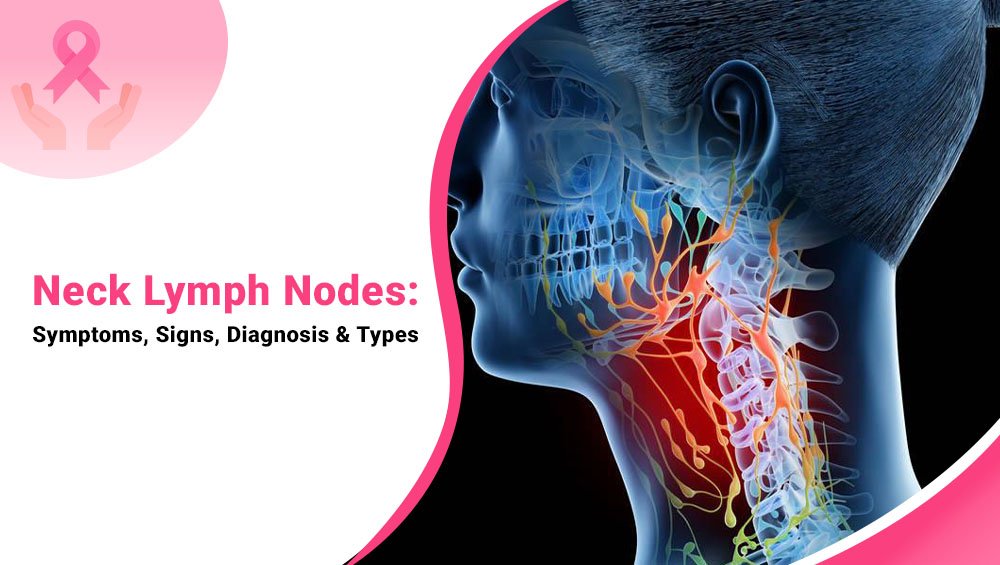
Several lymph nodes are present in the neck like the sides, below the jaw, below the ears, and above the collar bone. Normally, these nodes are small and soft, and usually go unnoticed by an individual. During an infection, the body initiates an immune response which results in nodes swelling.
In certain situations, the cause of swelling can be of greater concern, including malignancies of the lymph nodes in the neck, where the cancerous cells either begin in the lymphatic tissue (as in lymphoma) or spread from another region of the body.
Why Do Lymph Nodes in the Neck Swell?
Swollen lymph nodes can happen for several reasons, from infections that are not serious to serious infections.
1. Infections (Most Common Cause)
Infections are a common cause of swollen lymph nodes. They can include:
- Common cold and flu
- Throat infections
- infections of the tonsils
- Dental infections
- Infections of the lungs, known as tuberculosis
These infections can cause lymph nodes to be painful and once the infection is gone, the swelling will go away.
2. Autoimmune Conditions
Some autoimmune disorders cause the lymph nodes to swell because the immune system is overactive.
3. Cancer of the lymph nodes in the neck
Swelling in the neck can be a sign of cancer. Cancer of the lymph nodes in the neck can be due to:
- Lymphoma (cancer of the lymph nodes)
- Cancer of the head and neck
- Cancer of the thyroid
- Cancer of the lungs
Cancer of the breast that spreads to the lymph nodes in the neck
If you use tobacco, drink alcohol, have an infection of the HPV, or have a cancer in your family, you are at risk.
Symptoms of Swollen Neck Lymph Nodes
The symptoms depend on what is causing them.
Symptoms can include:
- A lump in your neck that you can see or feel
- Pain and tenderness, possibly due to an infection
- A fever
- A sore throat
- Feeling tired
Symptoms that suggest you may have lymph node cancer in your neck include:
- Swelling that is painless
- A lump that is hard and does not feel soft
- Sweating at night
- Unexplained weight loss
- Feeling tired all the time
- Having trouble swallowing
- A persistent hoarse cough
One of the main differences is that lymph nodes due to infections are painful and go away after some time. In comparison, lymph nodes due to cancer don't hurt and keep growing.
Signs That a Lump in the Neck Could Be Cancer
It's possible that lumps aren't always caused by cancer. However, because some elements of lumps require urgent evaluation by a health professional, these elements should be explained.
Lumps in cancerous neck lymph nodes may be described as:
- Hard and firm in consistency
- Non-tender
- Fixe (not freely movable)
- Gradually increasing in size
- Present for more than 2–3 weeks
- Associated with unexplained weight loss
- Accompanied by persistent voice changes
Having one or more of these signs should prompt an immediate consultation with a specialist.
How Are Cancer Lymph Nodes in the neck diagnosed?
Finding the exact reason for swollen lymph nodes requires both precision and an early diagnosis.
The process for evaluation is straightforward but it can involve several steps.
1. Thorough Clinical Assessment
A general physical examination will look for size, texture, the range of motion, and any additional symptoms.
2. Neck Ultrasound
This can show what the inside of the lymph nodes looks like.
3. FNAC (Fine Needle Aspiration Cytology)
This is a cell sampling procedure from the lymph node for testing.
4. Core Needle Biopsy
This can obtain a bigger comparable tissue fragment.
5. Vascular Imaging
This is a fancy way of saying a CT, an MRI, or a PET-CT. These are primarily used to find sources of tissue that have spread.
6. Blood Work
Blood work is done to evaluate health, which can include the presence of an infection or issues with the blood
Treatment Options for Cancer Lymph Nodes in Neck
Cause-dependent treatment.
When caused by infection, treatment would consist of:
- antibiotics
- anti-inflammatory medication
- supportive care
When caused by cancer, treatment may consist of:
- surgery
- chemotherapy
- radiation therapy
- targeted therapy
- immunotherapy
Management is as per the individual based on the type of cancer, stage of cancer, and the health status of the patient. The earlier the cancer, the better the outcomes, provided the patient is treated early.
When Should You See a Cancer Specialist in Gurgaon?
You should get medical help when:
- A lump on your neck lasts longer than 2-3 weeks
- The swelling is growing
- The lump is hard and doesn’t hurt
- You lose weight and start having night sweats for no reason
- You have trouble swallowing or your voice is super raspy and won’t get better
- You’ve smoked or drunk alcohol in the past
An experienced Cancer Specialist can help determine whether the lump is non-cancerous (benign) or whether more tests are needed.
Conclusion
Swollen lymph nodes in the neck are very common and usually occur due to infections that can be cured with proper treatment. But if a lump or swelling persists, becomes hard and painless, or keeps growing, it should not be overlooked. Early detection of warning symptoms associated with cancer in lymph nodes in the neck can greatly help in the treatment and survival of patients.
If you observe any constant swelling or are worried about a lump in cancer lymph nodes in the neck, it is highly recommended to consult a specialist. Dr. Pooja Babbar, a senior Cancer Specialist in Gurgaon, offers a detailed diagnosis and customized treatment for cancers of the head and neck, lymphoma, and metastatic cancers affecting lymph nodes. Early consultation can literally be a life-saver.


