
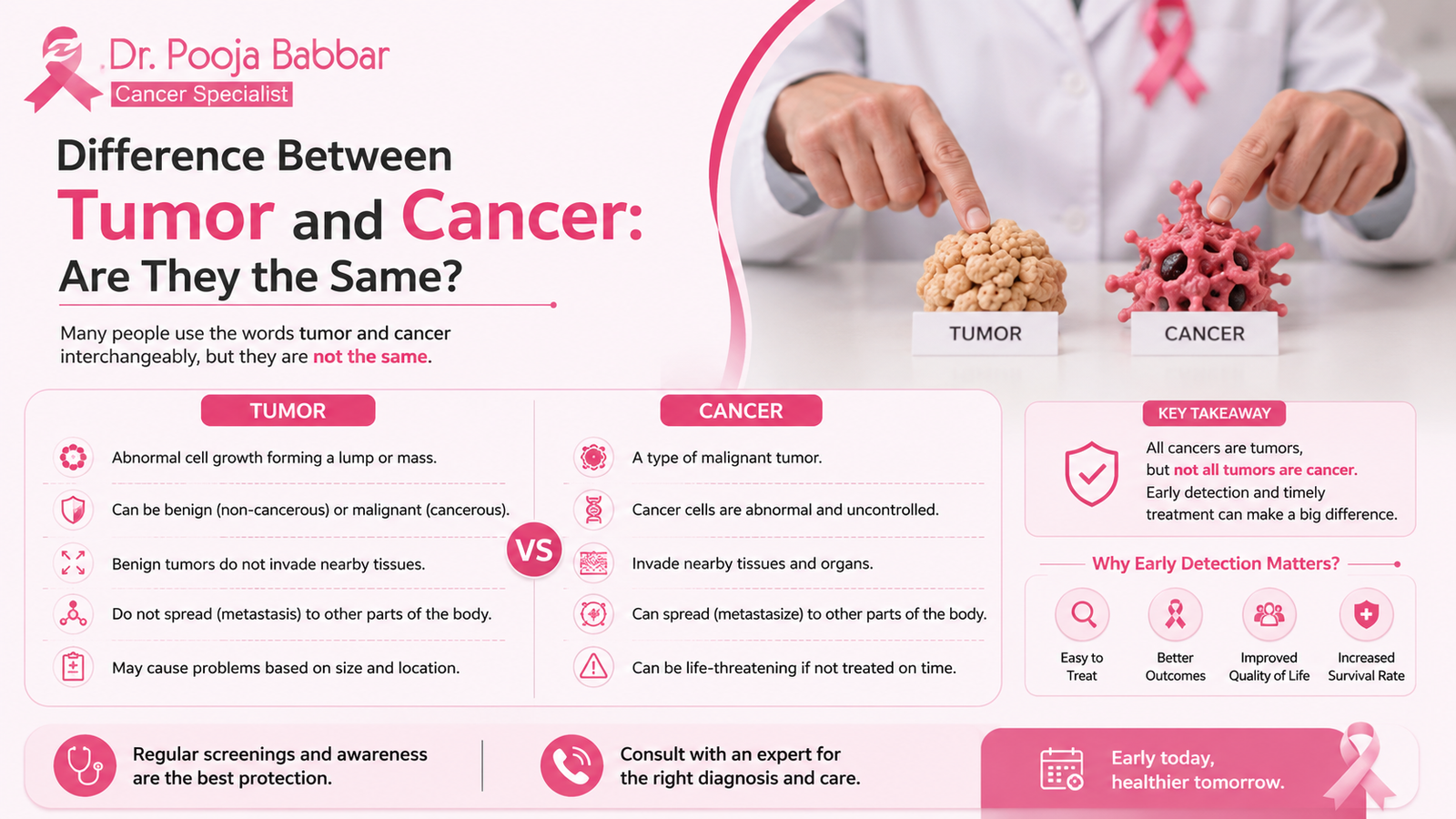
No, a tumor and cancer are not the same thing. A tumor is an abnormal lump or mass of tissue that forms when extra cells grow abnormally. Tumors can be benign, meaning they are not cancerous, or malignant, meaning they are cancerous.
Cancer, on the other hand, is a specific disease in which abnormal cells grow uncontrollably and may invade nearby tissues or spread to other parts of the body.
Understanding the difference between tumor and cancer can help reduce unnecessary worry and make it easier to understand medical reports and discuss the appropriate evaluation and treatment options with a doctor.
What Is a Tumor?
A tumor is an abnormal mass of tissue that forms when cells grow and divide too quickly or do not die when they should. Tumors can develop in different parts of the body and may be either non-cancerous (benign) or cancerous (malignant).
Benign Tumor
A benign tumor is not cancerous. It generally remains in the area where it develops and does not spread to other parts of the body.
Malignant Tumor
A malignant tumor is cancerous. Its abnormal cells can grow uncontrollably, invade nearby tissues and, in some cases, spread to other parts of the body.
Therefore, having a tumor does not automatically mean that a person has cancer. Further medical evaluation may be needed to determine whether the growth is benign or malignant.
What Is Cancer?
Abnormal cells proliferate uncontrollably due to mutations in their DNA among the various types of diseases classified as cancer. Cancer differs from benign tumors in that it can infiltrate neighboring tissues and can disseminate to further organs via the bloodstream or the lymphatic system.
Cancer cells can metastasize and continue proliferating in a different organ or system in the body far from the primary site of the tumor.
While solid tumors can be formed by some cancers, for others, like leukemia, a blood cancer, no solid structure can be formed.
Difference Between Tumor and Cancer
Many people wonder about the difference between cancer and tumor. Although the two are related, they are not identical.
Understanding the difference between tumor and cancer helps patients avoid assuming that every lump or abnormal scan result means cancer.
Are Tumor and Cancer the Same?
In general, what is asked is, "Is tumor the same as cancer?"
The answer is no.
While a tumor refers to an abnormal lump of cells, cancer is the name given to the disease of the invasive cells that grow and metastasize.
Although most cancer types are tumor-forming, not all tumor types are cancerous. For instance, a benign lipoma is a tumor, but is not a cancer.
Only a qualified medical professional is able to determine if a tumor is benign or malignant.
Is Tumor a Cancer?
Many patients ask, “Is a tumor cancer?” It depends on the specific tumor.
- Benign tumors are not cancer. They typically stay where they are and do not spread.
- Malignant tumors are cancer and need to be treated.
- Some abnormal growths can show precancerous changes which need to be watched and may need to be treated before they turn into cancer.
Tumors can behave differently, so doctors focus on imaging and biopsy results instead of just appearance.
Benign vs Malignant Tumors
Understanding the difference between benign and malignant tumors helps reduce confusion.
While benign tumors are generally less serious, some may still require treatment if they press on nearby organs, nerves, or blood vessels.
Common Types of Tumors
Various forms of tumors and growths are usually detected.
These include:
- Lipoma – a benign tumor composed of fat.
- Fibroma – a benign growth formed of fibrous tissues.
- Adenoma – a benign tumor composed of glandular tissue, though some adenomas require special attention.
- Cysts – are not considered tumors, but fluid-filled sacs.
- Malignant tumors – these are cancerous tumors.
The presence of a lump on its own cannot diagnose its nature.
Common Signs That Need Medical Evaluation
Not all lumps or swellings are indicative of cancer, although some signs should not be ignored under any circumstance.
If you experience:
- A consistent lump or swelling
- A growing lump
- Pain for no apparent reason
- Unexpected weight loss
- Extreme tiredness
- Bleeding for unknown reasons
- Trouble swallowing
- Abnormal bowel/bladder activity
- A non-healing sore
The specific signs differ according to the organ involved.
How Doctors Diagnose a Tumor or Cancer
Tumor diagnosis is a series of tests performed to check whether the tumor is benign or malignant.
This may involve:
- Extensive patient history
- Physical exam
- Scans like ultrasonography, computerized tomography scan, or MRI
- Blood test when needed
- Biopsy in which a small sample of the tissue is collected and examined
- Histopathology, which is microscopic examination of the tissue by the pathologist to pinpoint the nature of the cells
The most trustworthy technique for checking the malignancy of the tumor is biopsy.
Can Benign Tumors Become Cancerous?
The majority of benign tumors do not develop into cancer.
Nevertheless, there may be some conditions that are prone to becoming cancerous. It is for this reason that some patients are supposed to have follow-up consultations and even tests performed periodically.
Your doctor will make the decision whether you need to be monitored or have the condition treated depending on various factors.
When Should You Consult an Oncologist?
You should consider consulting an oncologist if you have a persistent or unexplained lump, a suspicious finding on an ultrasound, CT, or MRI, or an abnormal biopsy result. A family history of cancer, unexplained symptoms that do not improve, or a referral from another doctor are also reasons to seek specialist evaluation.
You can consult Dr. Pooja Babbar, Cancer Specialist in Gurgaon, for appropriate evaluation, diagnosis, and guidance on further treatment if required.
Getting evaluated early does not necessarily mean that you have cancer. However, timely medical assessment can help identify the cause of your symptoms and ensure appropriate care when needed.
Conclusion
The knowledge of what a tumor is as compared to cancer can ease some stress, but more importantly, can help with your understanding of your health care choices. Just because a person has a tumor doesn't mean they have cancer.
Tumors can be benign and remain in one place, whereas cancer has cells that are malignant and can spread to other tissues. Since imaging tests cannot always determine what kind of tumor you have, a timely medical evaluation and the necessary biopsy are important.
If you have a lump, a suspicious imaging test, or have reasons to be concerned regarding cancer, you should see Dr. Pooja Babbar, a qualified Surgical Oncologist, who can offer a professional assessment and caring, evidence-based options.


