
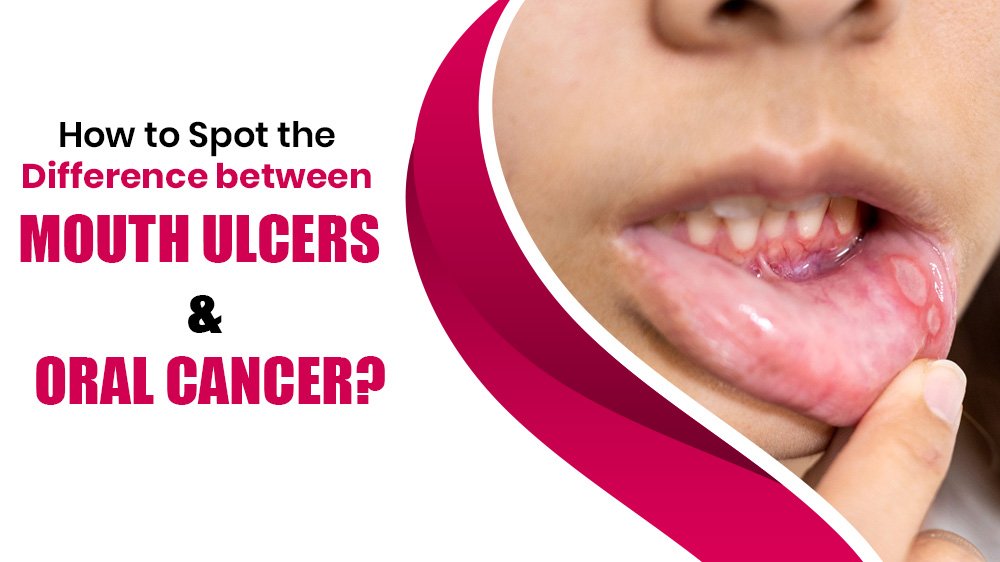
A sore in your mouth might just be seen as an annoying mouth ulcer that sometimes comes as a result of an injury, some stress or from eating spicy foods. Most mouth ulcers go away on their own, but some stubborn mouth sores can be an indicator of something worse mouth cancer.
Learning how to differentiate a mouth ulcer from cancer is very important. When you mistake a mouth ulcer for cancer and vice versa, it can lead to delays in diagnosis and ultimately change how effective a treatment can be.
This post discusses the differences between mouth ulcers and mouth cancer, and discusses the signs that should be concerning. The post also lays out the parameters for when a medical consultation is warranted to ensure that you get the treatment that is most appropriate, as quickly as possible.
Understanding Mouth Ulcers
Mouth ulcers are non-cancerous sores that can appear in the inner cheeks, tongue, lips, gums, and the floor of the mouth. They are usually caused by stress, trauma, hormonal changes, or certain foods, and they can hurt a lot while they are also dangerous.
Most of the time, mouth ulcers are small, round or oval lesions that can appear with a white or yellow in the middle with a red border. These sores heal on their own and won't leave a mark. There is no cancer risk associated with mouth ulcers. Repeated mouth ulcers might require you to see a doctor, though.
What Is Oral Cancer?
Oral cancer is a type of cancer that impacts the tissues of the mouth including the tongue, lips, gums, cheeks, the roof and floor of the mouth. It is often associated with tobacco, alcohol, and HPV infection.
Oral cancer lesions, like mouth cancer lesions, do not heal on their own. They can look like ulcers that don't go away, or like red and white patches, lumpy tissues, or lumps that get unexplained. Oral cancer can be painless which can result in a late diagnosis. It is important to catch it early on, since early diagnosis greatly improves survival rates.
Difference Between Mouth Ulcer and Cancer
Understanding the difference between mouth ulcers and cancer lies in how the lesions change over time. Mouth ulcers have a very predictable healing pattern. They get smaller and go away in about 2 weeks. Oral cancer lesions, on the other hand, persist and worsen, getting larger over time.
Mouth ulcers are very painful and are soft to the touch. They mainly stay soft with no crust. Cancer lesions are often painless and feel hard, thick and crusty. They may even bleed. Some symptoms cancer ulcers bring are difficulty chewing, swallowing, or speaking. Always see a specialist for persistent non-healing sores.
Mouth Cancer and Mouth Ulcer: Key Differences
Warning Signs That Should Not Be Ignored
While the following symptoms might suggest that you have mouth ulcers, they could also be signs of oral cancer, and you should see a doctor if you have them:
- Mouth sores that last more than two weeks
- Unexplained bleeding in the mouth
- Trouble chewing, swallowing, or talking
- A lump in your neck or jaw
- Persistent pain or numbness
- Red and white patches that won’t go away
These signs need to be taken seriously to avoid the disease progressing to more dangerous levels.
Why Early Diagnosis Is Critical
Oral cancer at its early stages can often require less aggressive treatment options that are highly effective. These treatment options can have less of an impact on one’s functionality and cosmetically.
Delayed diagnosis, however, can lead to an advanced case of cancer and require more extensive treatment options that can negatively impact one’s quality of life and their ability to speak and swallow. Being able to tell the difference between mouth cancers and mouth ulcers can greatly improve one’s prospects for survival and their overall long-term outcomes.
When to Consult a Cancer Specialist
If you have any mouth sores that won't heal after 2 weeks, come back again, or changes that are getting worse, then see a specialist. Getting referred early allows for a proper diagnosis, assessment, and potential biopsy. An experienced Cancer Specialist can offer timely care and optimal treatment plans.
Conclusion
Mouth ulcers are pretty common and go away on their own, but you should definitely take note of unusual or recurring ones. Knowing the difference between an oral sore and oral cancer can help a person figure out when something is wrong and understand when it's time to go to the doctor.
Getting oral cancer when it's early on is very treatable, and people can have a good quality of life afterwards. Dr. Pooja Babbar, Cancer Specialist in Gurgaon, provides patients with evidence-based, kind, and good oncology care. Evaluating mouth sores early and getting the right advice can protect a person’s oral health and help prevent them from serious problems in the future.


