
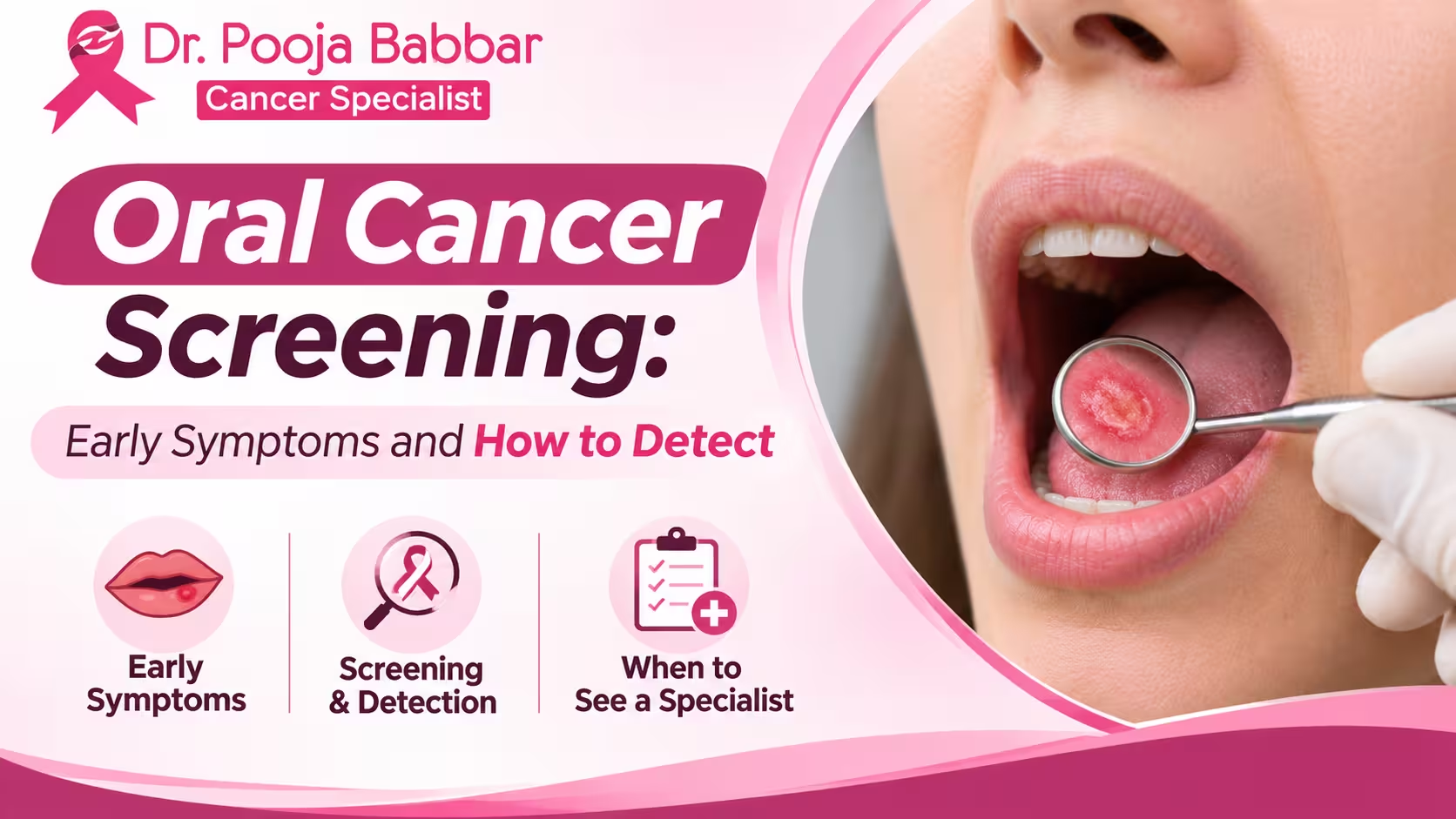
An oral cancer screening is a physical and visual examination of your mouth, lips, tongue, cheeks, and throat to detect early signs of cancer or pre-cancerous lesions.
What Is Oral Cancer?
Oral cancer, also known as mouth cancer, is a type of head and neck cancer that develops when abnormal cells in the mouth begin to grow uncontrollably. Most oral cancers start in flat, thin cells called squamous cells that line different parts of the oral cavity.
These cells may develop changes that cause them to grow and multiply abnormally. Oral cancer can affect several areas of the mouth, including:
- Lips
- Tongue, including the sides and underside
- Gums
- Inner lining of the cheeks
- Floor of the mouth
- Roof of the mouth
Oral cancer may develop gradually, and its early signs can sometimes resemble common mouth problems. Therefore, persistent ulcers, unusual patches, lumps, or other changes in the mouth should be evaluated by a qualified healthcare professional.
What Are the Early Symptoms of Oral Cancer?
Recognising the early signs of oral cancer is important because some changes may initially appear minor. However, unusual symptoms that persist or worsen should not be ignored.
Common oral cancer symptoms include:
- Non-healing mouth ulcers: Sores that do not heal within two weeks or repeatedly develop in the same area.
- White or red patches: White patches (leukoplakia) or red patches (erythroplakia) inside the mouth that may need medical evaluation.
- Unusual lumps or thickening: A lump, swelling, or thickened area on the tongue, gums, or inner cheeks.
- Persistent mouth pain: Unexplained pain or discomfort in the mouth that does not improve.
- Difficulty swallowing: Pain or difficulty while swallowing food or liquids.
- Restricted tongue or jaw movement: Trouble moving the tongue or opening the mouth normally.
- Numbness: Unexplained loss of sensation in the tongue, lips, or other areas of the mouth.
- Voice changes: Persistent hoarseness or changes in the voice.
- Neck lumps: Unusual swelling or lumps around the neck, which may indicate enlarged lymph nodes.
These symptoms do not necessarily mean someone has cancer. However, persistent changes should be examined by a qualified healthcare professional.
What Are the Risk Factors for Oral Cancer?
Certain lifestyle habits, infections, and health-related factors can increase the risk of developing oral cancer. Understanding these risk factors can help people make informed decisions about their oral health.
Some common risk factors include:
- Tobacco consumption: Smoking cigarettes, bidis, and using chewing tobacco, gutka, or other tobacco products can significantly increase oral cancer risk.
- Areca nut and betel quid: Regular consumption of supari, paan, and areca nut preparations can increase the risk of oral cancer.
- Excessive alcohol consumption: Frequent and heavy alcohol use can increase the risk, particularly when combined with tobacco.
- HPV infection: Certain types of human papillomavirus (HPV) are associated with cancers of the oropharynx, including the tonsils and base of the tongue.
- Sun exposure: Prolonged exposure to ultraviolet radiation can increase the risk of lip cancer.
- Increasing age: The risk of oral cancer generally increases with age.
Avoiding tobacco and areca nut products and limiting alcohol consumption are important steps towards reducing preventable risks.
What Is Oral Cancer Screening and Why Is It Important?
Oral cancer screening involves examining the mouth for unusual changes, suspicious lesions, and potentially precancerous conditions. Its main purpose is to identify abnormalities that may require further investigation.
A clinical oral examination generally includes checking the lips, tongue, gums, inner cheeks, roof of the mouth, and floor of the mouth. The doctor may also examine the jaw, throat, and neck for unusual lumps or swelling.
Oral cancer screening is particularly important for people who use tobacco, consume areca nut products, or have other recognised risk factors.
However, it is important to understand that there is no universally established routine screening test for all asymptomatic adults. Screening and diagnostic evaluation should be guided by clinical findings and individual risk factors.
How Is Oral Cancer Screening Done?
A clinical oral examination is usually straightforward and does not involve invasive procedures. During the examination, the doctor looks for unusual changes and checks whether any area requires further investigation.
The screening process generally involves:
1. Medical and Lifestyle History
The doctor may ask about tobacco consumption, alcohol use, previous oral problems, and other relevant medical conditions. This helps identify possible risk factors.
2. Visual Examination
The doctor examines the lips, tongue, gums, inner cheeks, roof of the mouth, and floor of the mouth for ulcers, patches, lumps, or other abnormalities.
3. Physical Examination
The doctor gently feels the tissues inside the mouth and examines the jaw and neck to identify unusual thickening, swelling, or enlarged lymph nodes.
4. Assessment of Suspicious Areas
If an unusual patch, ulcer, or lump is identified, the doctor evaluates its appearance, location, and duration. Further investigations may be recommended depending on the findings.
5. Referral for Diagnostic Testing
If the examination raises suspicion of cancer, the patient may be referred for a biopsy or other appropriate investigations to establish the diagnosis.
Special lights or staining techniques may sometimes be used as additional assessment tools, but they cannot independently confirm whether a lesion is cancerous.
What Tests Are Used to Confirm Oral Cancer?
Oral cancer screening and oral cancer diagnosis are two different steps. Screening helps identify suspicious changes, while diagnostic tests determine whether cancer is actually present.
The following investigations may be recommended:
- Oral Biopsy: A small tissue sample is collected from the suspicious area and examined under a microscope. A biopsy is the standard method for confirming oral cancer.
- CT Scan: A CT scan produces detailed images that help doctors assess the location and possible spread of cancer.
- MRI Scan: MRI provides detailed images of soft tissues and may help determine how deeply a tumour has grown.
- PET-CT Scan: This imaging test may be recommended to assess cancer activity and check for possible spread to other parts of the body.
Not every patient requires all these investigations. The doctor recommends tests according to the examination findings and suspected extent of the disease.
How Can You Check for Early Signs of Oral Cancer at Home?
A simple oral self-examination can help you become familiar with your mouth and notice unusual changes. However, it cannot replace a professional oral examination or confirm a cancer diagnosis.
Follow these steps:
- Stand in front of a mirror in a well-lit area.
- Check your lips and inner cheeks for unusual patches or sores.
- Examine your tongue, including its sides and underside.
- Look at your gums, roof of the mouth, and floor of the mouth.
- Notice any unusual lumps, swelling, or unexplained bleeding.
- Consult a doctor if you identify a persistent abnormality.
Pay particular attention to changes that do not heal or improve over time.
When Should You Consult a Doctor for Oral Cancer Screening?
You should seek medical advice if you experience a mouth ulcer that does not heal within two weeks, persistent white or red patches, unexplained lumps, difficulty swallowing, or continuous mouth pain.
People who regularly consume tobacco, gutka, or areca nut products should also discuss their oral health risks with a healthcare professional.
Do not wait for symptoms to become severe before seeking medical attention. Timely evaluation can help identify the underlying cause and determine whether further testing is needed.
Conclusion
Oral cancer can develop gradually, and its early signs may sometimes resemble common mouth problems. However, persistent ulcers, unusual white or red patches, unexplained lumps, and difficulty swallowing should never be ignored. Oral cancer screening and timely medical evaluation can help identify suspicious changes and determine whether further diagnostic tests are needed. Avoiding tobacco, limiting alcohol consumption, and paying attention to oral health are also important preventive steps. If you notice any concerning symptoms or need expert guidance regarding cancer diagnosis, consult Dr. Pooja Babbar, the best oncologist in Gurgaon, for personalised advice and appropriate cancer care.
Frequently Asked Questions (FAQs)
1. What are the first warning signs of oral cancer?
Common warning signs include non-healing mouth ulcers, persistent white or red patches, unexplained lumps, mouth pain, difficulty swallowing, and numbness in the tongue or lips.
2. How is oral cancer detected early?
Oral cancer may be detected through a clinical examination of the mouth, tongue, gums, and surrounding tissues. Suspicious areas may require a biopsy for confirmation.
3. Is oral cancer screening painful?
A routine visual and physical oral examination is generally painless. If a suspicious area requires a biopsy, local anaesthesia is usually used to minimise discomfort.
4. Can a mouth ulcer be a sign of oral cancer?
Most mouth ulcers are not cancerous. However, an ulcer that does not heal within two weeks, particularly with other unusual changes, should be medically evaluated.
5. Who is at higher risk of developing oral cancer?
People who consume tobacco, gutka, betel quid, or areca nut, as well as those who regularly consume excessive alcohol, have an increased risk of oral cancer.


