
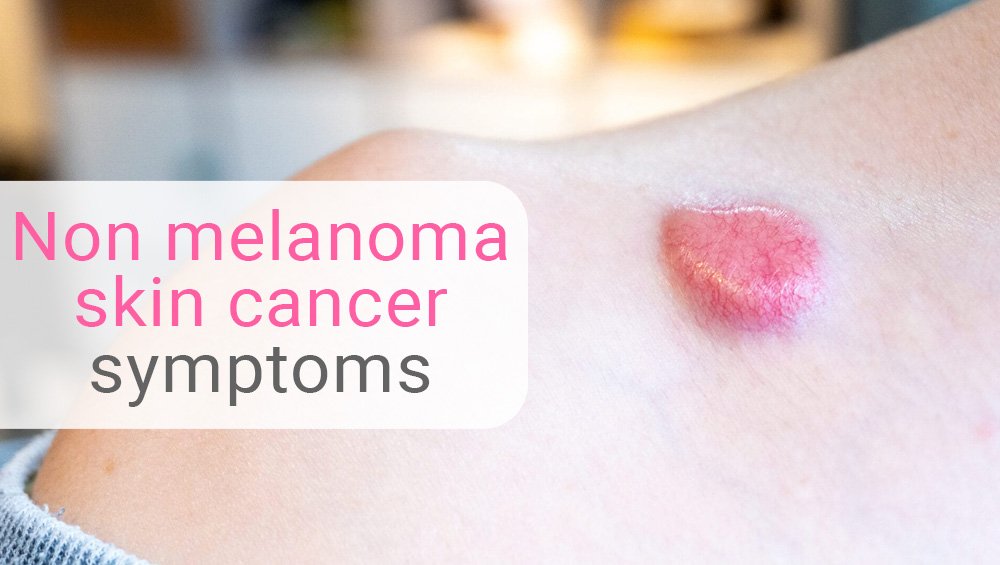
Are you aware that skin cancer is the most prevalent type of cancer in the world? Nevertheless, if it is detected early, the good news is that most cases can be treated effectively. This is particularly valid for non-melanoma skin cancers such as Basal Cell Carcinoma and Squamous Cell Carcinoma. In this blog, we shall decompose the skin cancer symptoms into the simplest language so that you can readily understand what to expect. Whether you are worried about skin changes or are in need of information regarding early-stage skin cancer, this guide will assist you in noticing the signs of it, even before they become severe.
Understanding Non-Melanoma Skin Cancer
Non-melanoma skin cancer, also known as NMSC, is a form of skin cancer that arises from the outer layer of the skin. It is slower to spread than melanoma, the most deadly kind of skin cancer; however, this doesn't mean that it must be ignored. BCC as well as SCC represent the two primary types of non-melanoma skin tumors. Although their names may appear complicated, they're only different versions of the same changes to the skin. Skin cancers, such as NMSC, are most often present in regions that receive the most sunlight exposure, including the neck, face the ears, and hands. However, they can also develop anywhere in the human physique (even within the most unassuming areas). The basic concept is clear: if you understand the characteristics of these spots and their locations, then it would be much easier for you to recognize when something on your skin seems to be “off.”
Key Signs of Early Stage Skin Cancer (The “Ugly Duckling” Concept)
Early-stage skin cancer detection is based on the same principle: a new, unusual, or changing area is always worth a physician's visit. Minor changes in the appearance or color of your skin may be a sign of the presence of a problem. One of the ways doctors recommend monitoring the skin is the “Ugly Duckling” concept. In other words, if you have a mole that is different from the rest in any major way, by all means, have it checked by a dermatologist.
The first signs of skin cancer might be:
-
A wound that lasts longer than four weeks or one that has healed and then comes back.
-
Itching that is constant or tenderness, as well as bleeding or swelling from the mole skin bump, or area of the body.
-
A new spot that grows bigger or alters its surface.
At first, these changes might appear to be minor, but they are usually the earliest signs of skin cancer, particularly if the changes are sudden or prolonged over weeks.
Specific Symptoms by Type and Location
Basal Cell Carcinoma (BCC)
BCC is the leading type of non-melanoma skin cancer. It is slow-growing and seldom metastasizes, but if not treated, it can cause damage deeper in the skin. The main signs are:
1. Pearly or Waxy Bumps
These bumps may shine, be see-through, or look like a pearl. Little blood vessels might also be seen through them. They usually show up on places that get a lot of sun, such as the face and ears; thus, many people notice the signs of skin cancer on the face very soon.
2. Scar-like Patches
Areas that are flat, firm, pale, or yellowish and look like scars, even if you have never had an injury there, can be a sign of BCC at an early stage. These patches might gradually increase in size.
3. Irritated Red Patches
Some people get the skin reddened, itchy, and bleeding easily, or develop irritated patches, or have mild forms of skin cancer. Such things happen over the entire body but are mostly seen on the trunk, face, or shoulders, and around these spots.
Squamous Cell Carcinoma (SCC)
SCC is considered to be the most invasive kind of skin cancer that is found among non-melanoma cancers. It has a higher chance of spreading if not treated. The manifestations are typical:
1. Rough, Scaly Patches
These patches can be reddish or brownish and have something like dry, scaly, or crusty-feeling characteristics. Hydrating the skin does not work, which is usually the first hint that this might be one of the problematic skin cancer symptoms.
2. Firm Red Nodules
A firm, not-so-conspicuous, red lump that is painful can be a signal of SCC. These things might develop fast and should be seen by a doctor right away.
3. Crater or Ulcer-like Sores
Some SCC cases become cratered in the middle like a volcano, which might ooze blood or have a scab. This type is usually located on the lips, ears, and hands, and is regarded as one of the rather alarming signs of skin cancer.
When these signs occur on the face, they are commonly misdiagnosed as rashes or infections. However, the skin changes that do not go away are the most common signs of skin cancer on the face; thus, they should not be ignored.
When to See a Doctor (Especially If You’re in Gurgaon)
The importance of self-examination must never outshine the need for an early diagnosis, certified by professional methods. This implies that, when any lesion continues to bleed, itch, grow, or look weird, the person should immediately consult a healthcare provider. By any measure, if one is in Gurgaon and suspects skin cancer, they must have the skin cancer symptoms reviewed by an expert immediately. Look for the best medical oncologist in Gurgaon who specializes in the diagnosis and treatment of skin cancers. Professional inspection lets any problem be diagnosed early and leaves you from having to go through excruciating remedial measures later on.
Conclusion
The early recognition of the skin cancer symptoms can make a huge difference. Knowing about the signs of skin in its early stages, conducting frequent self-examinations, and receiving early medical consultation can all result in much better outcomes. Moreover, for people living in Gurgaon, expert medical support is very close to them, particularly when they have Dr. Pooja Babbar, who is the best medical oncologist in Gurgaon with a great experience of more than 15 years, fully committed to delivering state-of-the-art cancer care.


