
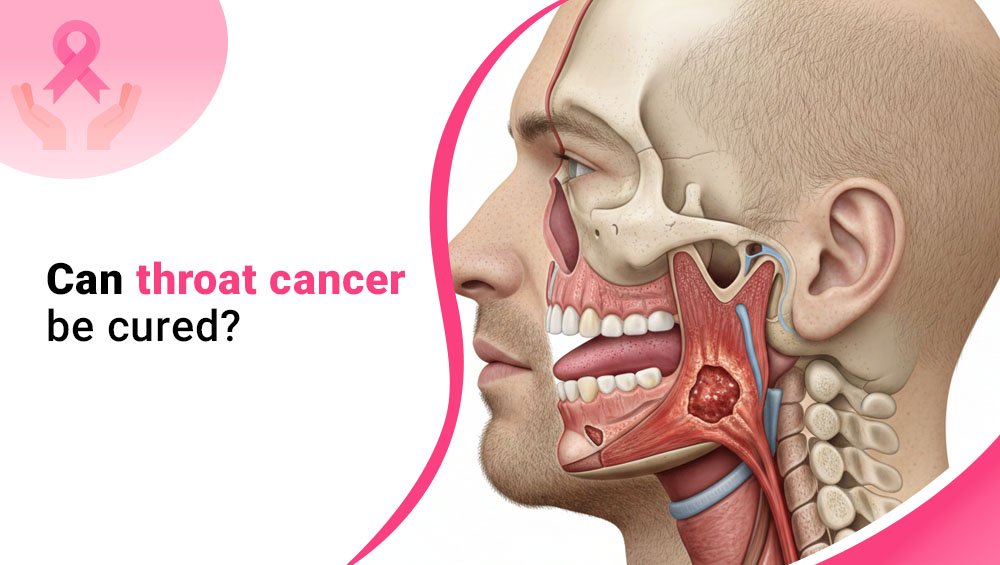
A diagnosis of throat cancer can raise terrifying thoughts of survival, treatment and the future in an instant. Among the most pressing questions that patients and their families may have is whether throat cancer can be cured or merely controlled.
The truth of the matter is that it is not always a simple answer, as it depends on a number of key factors, such as the stage of the cancer, the patient’s health, and the treatment that has been administered.
This blog post will examine whether throat cancer is a curable disease, the survival rate of throat cancer, and the prognosis based on stage, including stage 4 throat cancer.
Understanding Throat Cancer
Throat cancer refers to cancers that develop in the pharynx (throat), larynx (voice box), or tonsils. The condition most frequently occurs as head and neck cancers because it originates from the squamous cells that line the throat. The main risk factors for this condition include tobacco usage, heavy alcohol drinking, and human papillomavirus (HPV) infection, which especially affects oropharyngeal cancers.
The condition shows itself through persistent sore throat, difficulty swallowing, voice changes, unexplained weight loss, and a lump in the neck. Throat cancer diagnosis occurs at an advanced stage because its initial signs tend to be difficult to notice.
Is Throat Cancer Curable?
The question Is throat cancer curable? does not have a universal YES or No answer, as throat cancer can be curable in many instances, especially when it is diagnosed at an early stage.
There have been advances in cancer treatment and it has become possible to attain complete remission in many patients.
The term “cure” usually implies that there are no detectable cancer cells following treatment and that there are no recurrences in the long term. In advanced stages, throat cancer can still be curable, even if it is not possible to attain complete remission.
Throat Cancer Survival Rate
The throat cancer survival rate exists as a five-year survival rate which shows the percentage of patients sustaining life for five years after their diagnosis. The survival rates depend on three factors which include the cancer location the cancer stage and the patient's HPV status and treatment response.
Patients with early-stage throat cancer show better chances of survival than those with advanced throat cancer. Patients with HPV-positive throat cancers experience better treatment results and their outcomes show better results.
The survival statistics exist as population-based data which fails to determine the results for every patient because each case requires separate evaluation.
Stage-Wise Prognosis of Throat Cancer
Early-Stage Throat Cancer (Stage 1 & Stage 2)
Throat cancer can be treated successfully if it is caught early. Surgery or radiation therapy can be done while minimizing the risk of losing the patient’s ability to speak or swallow. Most patients have the ability to go into remission and have few side effects after completing treatment.
Locally Advanced Throat Cancer (Stage 3)
Stage 3 throat cancer is the result of even larger tumors or a small amount of cancer that has spread to the surrounding lymph nodes. In Stage 3 throat cancer, the most common treatment is a combination of radiation and chemotherapy, possibly followed by surgery. Many patients have the possibility of a cure if they are treated aggressively and quickly.
Stage 4 Throat Cancer
Stage 4 throat cancer means the cancer has spread to surrounding tissues, the lymph nodes, or distant organs. Stage 4 throat cancer is difficult to treat, but it is not necessarily incurable. Some patients achieve long-term remission with the steep treatment regimen of stage 4A. In these more advanced cases, the treatment focus is on improving survival length, as well as symptom control and quality of life.
Treatment Options That Improve Cure Chances
How to treat throat cancer involves looking at the stage, where the tumor is, and the health of the patient. Some of the most common treatments include:
- An operation to remove the tumor while saving important functions.
- Radiation to kill off cancer cells.
- Chemo to potentially work better with the radiation and to control the more severe disease.
- Targeted therapy that functions on specific mechanisms of particular cancer cells.
- And immunotherapy which helps the body fight cancer.
The best result will often come from a personalized and multi-faceted therapy approach.
Factors That Affect Throat Cancer Outcomes
Here are some of the factors that impact treatment success and cure potential for throat cancer:
- Stage of cancer at diagnosis
- HPV status
- Age and overall health of the patient
- Adherence to scheduled cancer treatments
- Expertise of the oncology team
Patients treated under specialized oncology care tend to have better disease control and survival outcomes.
Why Early Diagnosis Improves Survival
If throat cancer is diagnosed early, your chances of being fully cured are better. Identifying the warning signs and getting evaluated by a medical professional is better for the aggressive treatment outlook and the overall functionality of the patient. Late diagnoses can affect the treatment options available and can lead the patient to a lower chance of survival. Effective cancer care relies on awareness and timeliness of the follow-up.
Conclusion
Throat cancer doesn’t have to be terminal. Patients can be cured, especially when it is treated early. Even advanced cases like stage 4 throat cancer can significantly increase the survival rate with modern approaches.
Understanding prognosis, survival, and treatment options allows patients to make better decisions regarding their condition. With guidance from Dr. Pooja Babbar, a trusted cancer specialist in Gurgaon, patients receive systematic evidence-based oncology care with compassion.
Throat cancer, with timely consultation, accurate diagnosis, and expert treatment planning, can be cured.


