
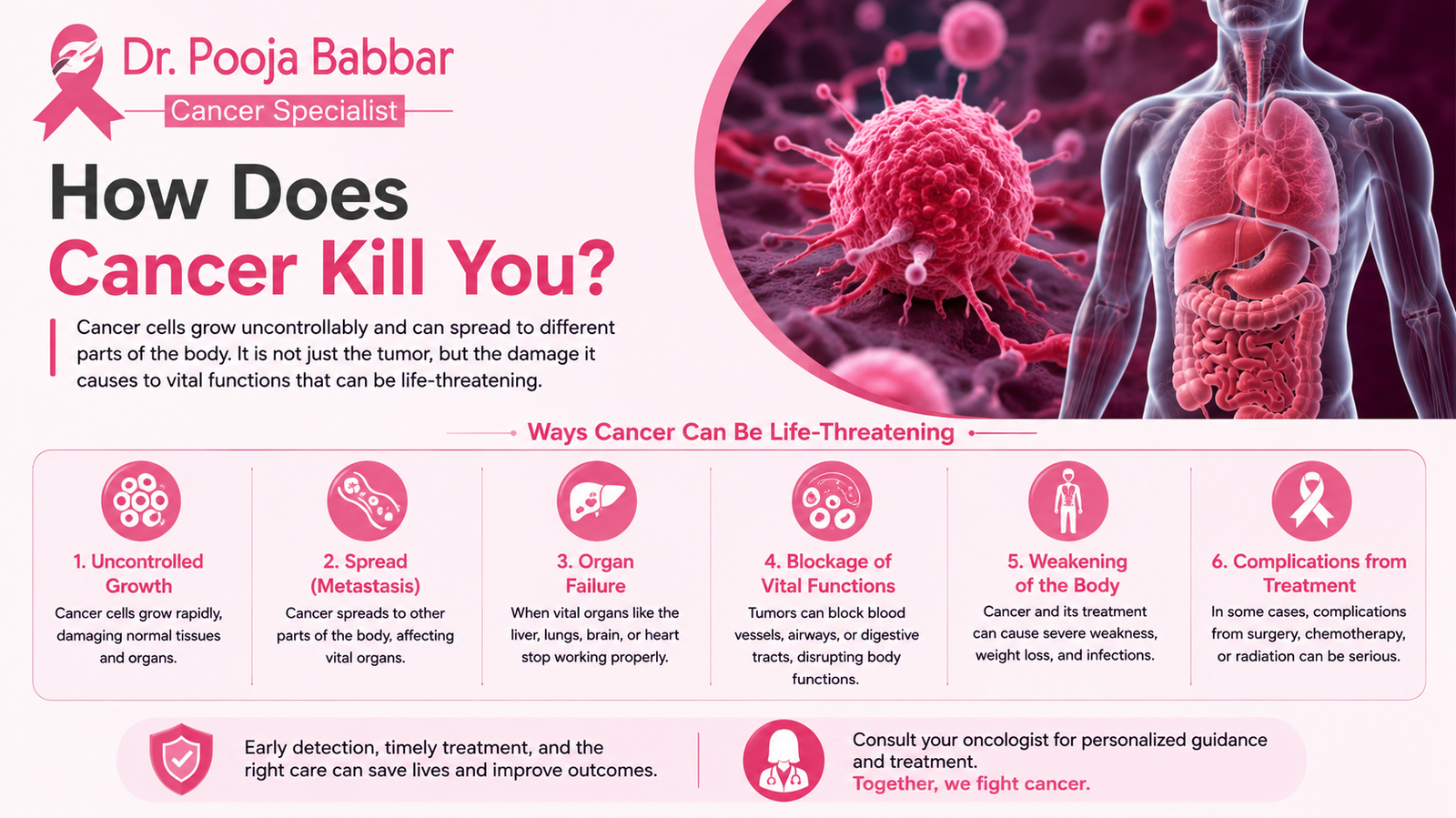
A cancer diagnosis can naturally raise concerns about how serious the disease may become. Cancer can become life-threatening when it disrupts vital organ functions, blocks essential body systems, or triggers severe complications throughout the body. However, cancer does not always lead to death, and many types of cancer can be treated or managed, particularly when diagnosed early.
When cancer becomes advanced, it may spread to critical organs such as the lungs, liver, or brain, affecting their normal function. In some cases, widespread cancer can also cause profound metabolic exhaustion, leaving the body increasingly unable to maintain essential functions.
This article explains how advanced cancer can affect the body, why cancer may become life-threatening, the role of metastasis and systemic complications, and why early diagnosis and timely treatment are important.
Does Cancer Always Kill?
No, cancer does not always kill. Many types of cancer can be treated successfully, and some can be fully cured, especially when they are detected and treated early. Survival can vary depending on the type of cancer, how quickly it grows, how early it is diagnosed, and how well it responds to treatment.
Some slow-growing cancers may be managed for many years, and some people with cancer may ultimately die from other, unrelated causes. This is why early detection, appropriate screening, and timely consultation with a cancer specialist are important for understanding the disease and choosing suitable treatment.
How Does Cancer Kill the Body?
Cancer usually becomes life-threatening when it affects the body's ability to perform essential functions.
Common Ways Advanced Cancer Affects the Body
These complications usually occur in advanced stages of cancer and vary from person to person.
Why Does Cancer Kill?
People often wonder, "How come cancer causes death?" Because cancer, when it has reached an advanced stage may lead to disruptions in various bodily functions.
1. Organ Damage
Cancer may cause damage to organs including the liver, lungs, brain or bone marrow. These organs may be significantly damaged and hence, they will stop working normally.
Examples include:
- Lung cancer may prevent breathing.
- Liver cancer may inhibit detoxification of the liver and production of vital proteins.
- Brain cancer may disrupt motor coordination and speech.
- Bone marrow cancer may stop blood cells from being produced.
It all depends on how much these organs have been affected.
2. Cancer Spreading (Metastasis)
Cancer that has spread from its origin to another part of the body is referred to as metastatic cancer.
Some common places of metastasis are:
- Liver
- Lungs
- Bones
- Brain
The treatment for metastatic cancer may prove to be difficult since the disease may affect several organs.
But still, it may be possible to control the disease with effective treatment.
3. Severe Infections
The effects of cancer or some cancer treatment methods can affect the immune system’s ability to protect against infections.
Severe infections can pose a danger to one’s life if not treated properly. This is especially true for those undergoing chemotherapy.
4. Malnutrition and Weight Loss
Severe weight loss and muscle wasting can occur in patients with late-stage cancer.
Reasons include the following:
- Appetite declines
- It may be painful to swallow
- The body burns energy more quickly
- The body is not receiving enough nutrients
- In cancer care, preserving nutrition is essential
5. Bleeding or Blood Clots
Some specific cancers increase the risk for patients of developing either abnormal bleeding or blood clot formation.
While these problems do not occur for all patients, they should be considered medical emergencies if and when they do occur.
Can a Tumor Kill You?
Many are concerned about the possibility of dying from a tumor.
The answer lies in the tumor type and its location.
Benign tumors are non-cancerous and typically do not metastasize to other body regions.
However, malignant tumors are cancerous and can damage tissues and even metastasize to other body regions.
Some non-cancerous tumors can damage tissues and even cause death if they press on critical body structures such as the brain or even large airways. The same can be said concerning large tumors that may interfere with the normal function of large organs.
This is the reason why a critical doctor should evaluate any mass or abnormal finding with imaging.
Signs That Cancer Is Affecting the Body Severely
Advanced cancer has a range of more systemic symptoms that may include:
- Chronic fatigue
- Dramatic weight loss
- Anorexia
- Trouble with respiration
- Intolerable and persistent pain
- Perpetual infection
- Altered mental status (variable)
These symptoms may indicate that a patient is nearing the end of life. However, they all require and deserve an expert medical evaluation.
Signs That Cancer Cells Are Dying
Many patients look for the “signs that cancer cells are dying.”
These signs do not exist. There are no indications that are easily attributed to the death of cancer cells.
Doctors evaluate the efficacy of cancer treatment based on whether:
- Imaging shows the tumor has decreased in size
- Blood tests have shown improvements
- Patients report less pain
- Patients exhibit better appetites
- Patients report a boost in energy
- Symptoms of cancer improve
Medical evaluation is the only way to determine how cancer is responding to treatment.
Can Cancer Treatment Prevent These Complications?
Today, modern medicine has developed innovative cancer treatments that aim to help provide patients with manageable cancer symptoms while trying to improve their overall quality of life.
Some treatments that might be offered to patients based on the type and stage of cancer that they are diagnosed with are:
- Surgeries
- Chemotherapy
- Radiations
- Targeted therapy
- Immunotherapy
Palliative care to improve the overall comfort of patients and to help ease symptoms.
Warding off and treating cancer in the early stages of the disease helps reduce and limit severe complications related to a more advanced status of cancer.
When Should You Seek Immediate Medical Care?
Cancer patients undergoing treatment should quickly contact an emergency room for the following;
- Difficulty Breathing
- Severe Bleeding
- High Fever
- Sudden Confusion
- Uncontrolled Pain
- Seizures
- Extreme Weakness & Inability to Stay Awake
Because of the serious nature of these symptoms, it is recommended that you contact an ER immediately.
The Importance of Early Diagnosis
Improving cancer diagnosis is thought by many to improve outcomes.
Symptoms of cancer should prompt early consultation by a cancer specialist, so treatment can begin quickly, before cancer has a chance to metastasize.
On average, the earlier the cancer is diagnosed, the more successful the treatment.
This is all the more reason to be attentive to cancer symptoms especially if they are persistent.
Conclusion
Understanding how cancer kills you begins with recognizing that cancer itself is not always fatal. Many cancers are successfully treated, particularly when diagnosed early.
When cancer becomes life-threatening, it is usually because advanced disease interferes with the normal function of vital organs or causes serious complications such as infection, malnutrition, or organ failure. Early diagnosis, timely treatment, and regular follow-up remain the most effective strategies for improving outcomes and maintaining quality of life.
If you or a loved one has concerns about cancer symptoms, treatment, or disease progression, consult Dr. Pooja Babbar, one of the best cancer specialists in Gurgaon, for compassionate evaluation, accurate diagnosis, personalized treatment planning, and comprehensive supportive cancer care.


