
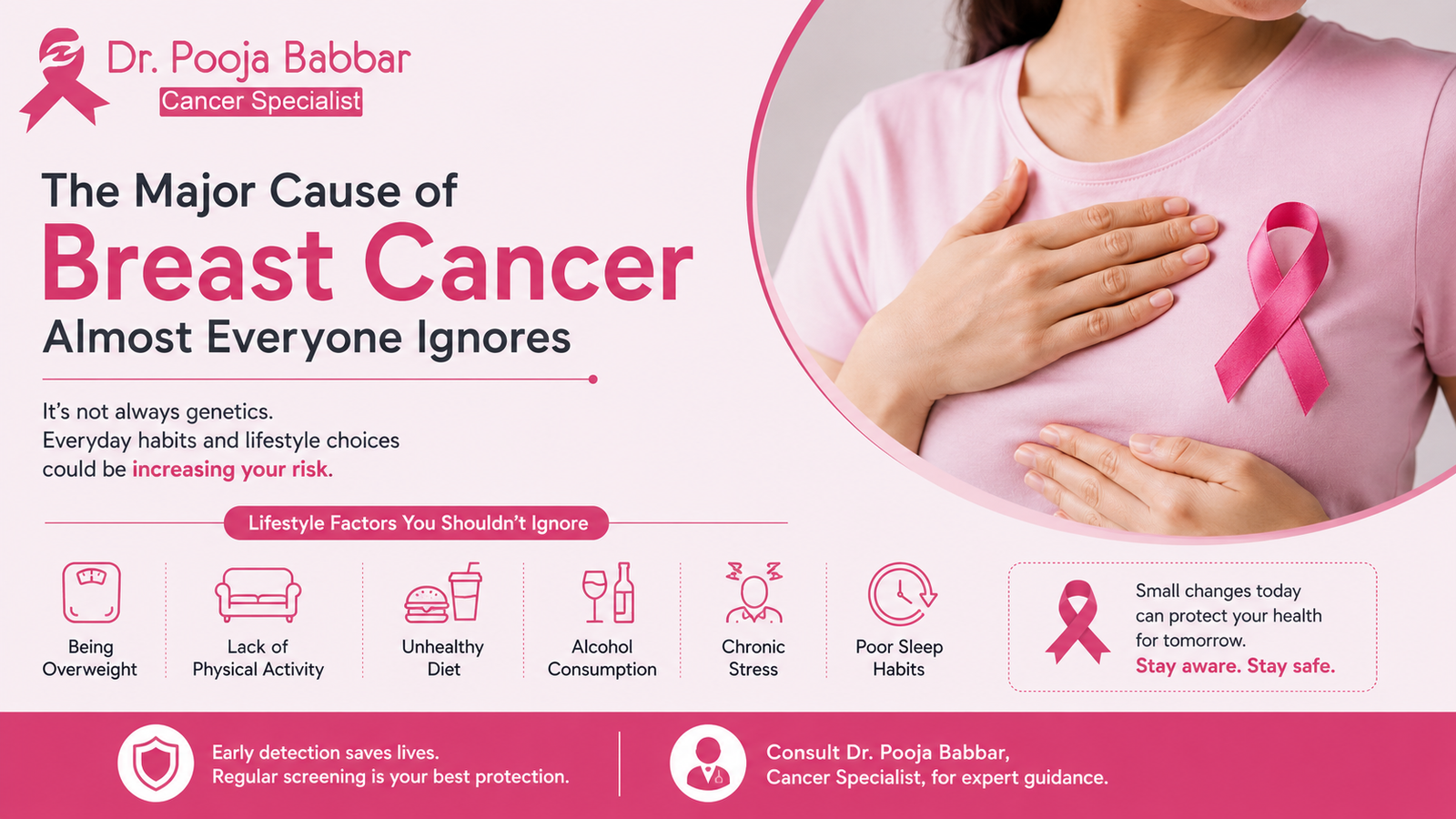
Obesity combined with a sedentary lifestyle and an unhealthy diet is one of the major preventable risk factors for breast cancer that is often overlooked. While many people primarily focus on family history and inherited gene mutations such as BRCA1 and BRCA2, breast cancer can develop due to a combination of genetic, hormonal, environmental, and lifestyle-related factors.
Inherited genetic mutations account for only a smaller proportion of breast cancer cases, while lifestyle-related factors are potentially more manageable. Maintaining a healthy weight, staying physically active, following a balanced diet, and being aware of other breast cancer risk factors can support overall breast health.
This blog explores the major risk factors for breast cancer, the role of obesity and lifestyle, modifiable and non-modifiable risks, early warning signs, preventive measures, and the importance of appropriate breast cancer screening.
What Is Breast Cancer?
Breast cancer is a disease where cells in the breast grow out of control and form a tumor. These abnormal cells can develop in the milk ducts or lobules of the breast. If not detected and treated, cancerous cells may grow into nearby tissues and, in some cases, spread to other parts of the body.
Not every breast lump is cancerous. Conditions such as breast cysts and fibroadenomas can also cause lumps and are usually non-cancerous. However, any new or unusual breast change should be evaluated by a doctor for proper diagnosis.
What Causes Breast Cancer?
Breast cancer is caused by mutations in the DNA of breast cells that tell them to grow and divide uncontrollably into tumors. These changes can develop over time and may be influenced by several factors, including:
- Ageing
- Inherited genetic mutations
- Hormonal factors
- Environmental exposures
- Lifestyle-related factors
In most cases, breast cancer does not have one single identifiable cause. Instead, its development may involve a combination of genetic, hormonal, environmental, and lifestyle factors.
The Risk Factor Many People Ignore
When people think about breast cancer risk, family history and inherited genetic mutations often receive the most attention. However, several lifestyle and reproductive factors may also influence breast cancer risk and are sometimes overlooked.
Some important factors include:
- Physical inactivity: Regular physical activity can support overall health and may help reduce breast cancer risk.
- Being overweight after menopause: Excess body fat after menopause can increase estrogen levels and may be associated with a higher risk of breast cancer.
- Alcohol consumption: Alcohol intake is associated with an increased risk of breast cancer, and the risk may increase with higher consumption.
- Reproductive factors: Factors such as having children later in life or not breastfeeding may influence breast cancer risk, although they do not directly cause breast cancer.
- Long-term hormone replacement therapy (HRT): Certain types of HRT may increase breast cancer risk, so the potential benefits and risks should be discussed with a healthcare provider.
Having one or more of these risk factors does not mean that breast cancer will definitely develop, and not having them does not eliminate the possibility. Understanding these factors can help people make informed health choices and discuss appropriate prevention and screening with their doctor.
Non-Modifiable Risk Factors for Breast Cancer
Some risk factors for breast cancer are unchangeable. Knowledge of these factors can help determine the need for further testing.
They include:
- Age: Increasing age
- Sex: Being Female
- Family history: Family history of breast cancer
- Genetics: Inherited genetic mutations, BRCA1 and BRCA2
- Personal history: Personal history of breast cancer
- Chest radiation: Chest radiation at a young age
- Dense breasts: Dense breast tissue
Having any of the risk factors does not mean breast cancer will occur. However, the risk is greater compared to the general population.
Modifiable Risk Factors You Can Control
Can Breast Cancer Be Prevented?
There is no way to prevent breast cancer completely, but certain lifestyle choices can decrease the risk.
Some of these lifestyle choices include:
- Not smoking
- Drinking in moderation
- Maintaining a healthy weight
- Working out consistently
- Keeping track of the normal appearances and feelings of your breasts
- Getting your mammogram when scheduled based on age and cancer risk
- Consider getting genetic counseling if you or your family has a history of breast or ovarian cancer
The most effective way to identify breast cancer early is to use proper screening.
Common Myths About Breast Cancer Causes
Early Signs That Should Never Be Ignored
Although symptoms may not necessarily mean one has cancer, the following alterations should be checked immediately:
- Lump or thickening in the breast
- Alteration in breast size or shape
- Breast skin appears pitted or pulled in
- Inverted nipple
- Discharge of blood from the nipple
- Prolonged redness or swelling
- Chronic breast pain
Immediate medical assessment will help ascertain whether the alterations are due to cancer or some other breast disease.
When Should You Consult a Breast Cancer Specialist?
If you have persistent changes to your breasts or received an abnormal mammogram or if you have a strong family history of breast or ovarian cancers, you should seek specialist evaluation.
Potentially higher-risk individuals should undergo individualized assessment of risk and screening as well. The reason for this is that prompt evaluation is beneficial in the context of potentially worrying findings. Striving to minimize the time it takes for further, appropriate evaluation for the concern should always be prioritized.
Reducing Your Breast Cancer Risk: Practical Everyday Steps
Even though it is not always possible to prevent breast cancer, these behaviors can help maintain breast wellness:
- Maintain an ideal body weight
- Eat a well-balanced and healthy diet
- Do not smoke
- Exercise regularly
- Undergo breast screening as advised
- Drink less alcohol
- Learn your family’s medical history
- Consult your doctor regarding any risk factors you have
These measures cannot reduce the risks but help maintain good health and promote early detection.
Conclusion
Breast cancer is caused by multiple factors and is not the result of a single exposure that was missed. Some factors, including age, inherited genes and family history, cannot be changed. Reducing weight and maintaining it with recommended physical activity, limiting alcohol intake and engaging in recommended screenings also may help manage risk. Awareness of breast changes also is critical, and checking with a physician is better than believing a myth or assuming it is benign.
If you worry about your breast cancer risk, family history of breast cancer, and/or if you experience any changes in your breast, please contact Dr. Pooja Babbar, one of the best cancer specialists in Gurgaon. Based on your history, she will provide you with custom recommendations and the best care.


