
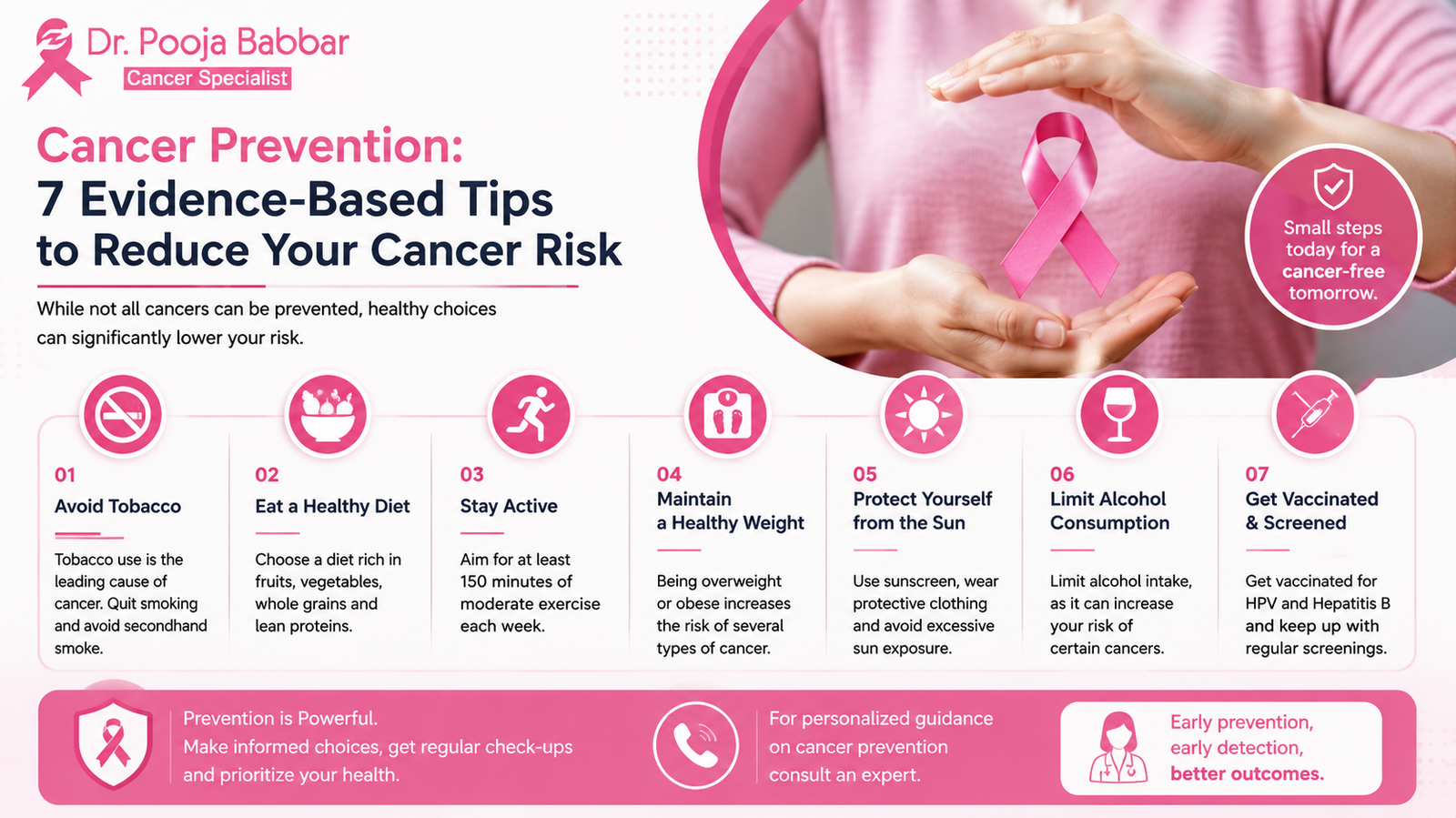
To lower your risk of developing cancer, adopting healthy lifestyle habits can make a meaningful difference. Key steps include quitting tobacco, eating a plant-rich diet, staying physically active, maintaining a healthy weight, limiting alcohol, protecting your skin from excessive sun exposure, getting recommended vaccinations, and following appropriate cancer screening schedules.
Cancer cannot always be prevented, as some risk factors are beyond our control. However, making informed lifestyle choices and staying up to date with recommended medical screenings can help reduce certain cancer risks and support long-term health. This blog explains practical, evidence-based ways to reduce your cancer risk and the importance of regular healthcare.
Can Cancer Be Prevented?
Cancer prevention often refers to reducing risks rather than removing them completely. Certain cancer risks are unavoidable like age, genetics, and some inherited changes. Some risks can be modified like tobacco use, obesity, physical inactivity, and certain infections. These can be avoided with healthy lifestyle changes.
Cancer screening is often one of the most useful tools for treating cancer in the early, more manageable stages. The clinical care of regular health appointments is just as impactful for prevention along with leading these healthy lifestyle changes.
7 Evidence-Based Ways to Reduce Your Cancer Risk
1. Avoid All Forms of Tobacco
Avoiding tobacco is one of the most effective ways to reduce cancer because of the many cancers- lung, mouth, throat, bladder, pancreas, and kidney- associated with smoking. Smokeless tobacco and secondhand smoke are also associated with cancer.
If you use tobacco, quitting at any age is beneficial. There are many cancer risks that will be reduced with time.
2. Maintain a Healthy Weight
Overweight and obesity lead to the occurrence of numerous types of cancer. Proper maintenance of a person’s weight using a nutritious diet and regular physical activity will have positive impacts on health and reduce the risks of getting cancer.
Suggestions:
- Select proper portion sizes.
- Minimize eating processed foods.
- Be active.
- Keep track of your weight.
3. Eat a Healthy, Plant-Rich Diet
Even though there is no magic food that prevents cancer, a balanced diet will ensure good health and may decrease the risk of developing cancer.
Eat more:
- Fresh fruits
- Vegetables of different kinds
- Whole grains
- Legumes
- Food high in fibre
Reduce intake of:
- Processed food
- High sugar-containing food
- Too much red meat
- Too many calories
Checklist for Healthy Eating
- Eat colourful fruits and vegetables every day
- Have whole grain products whenever possible
- Consume enough water
- Prefer home-cooked food
- Eat fewer processed foods
4. Stay Physically Active
Staying active contributes to overall health and control of body weight.
Physical activity, even in moderate amounts, should be done most days of the week by adults. Daily living tasks such as walking, cycling, swimming and even taking the stairs instead of the elevator are easy to incorporate into a physically active and healthy lifestyle.
Even daily sitting should be limited as it is an unhealthy behavior, especially when compounded by desk work.
5. Protect Yourself from Excess Sun Exposure
Sunlight UV rays can be the cause of skin cancer.
To stay safe:
- Apply sunscreen lotion
- Wear protective clothing and a wide-brimmed hat
- Wear sunglasses while outdoors
- Avoid too much sun in bright light conditions
- Avoid tanning beds
These are some easy steps that help you avoid any excessive UV exposure.
6. Get Recommended Vaccinations
Some infectious diseases may lead to cancer.
Vaccinations against:
- HPV (human papillomavirus) - will lower the risk of cervical cancer and certain other forms of cancer.
- Hepatitis B virus will lower the risk of developing liver cancer in connection with hepatitis B.
Consult your doctor regarding vaccines you may need depending on your age and health history.
7. Participate in Regular Cancer Screening
Cancer screening plays a vital role in early detection. Some cancers can be identified before symptoms develop, improving the chances of timely treatment.
Depending on your age, sex, and personal risk factors, your doctor may recommend:
- Breast cancer screening
- Cervical cancer screening
- Colorectal cancer screening
- Other appropriate screening tests
Following recommended screening schedules is an important part of cancer prevention and early diagnosis.
Lifestyle Habits That Support Cancer Prevention
Common Myths About Cancer Prevention
Myth: Healthy people never get cancer.
Fact: A healthy lifestyle lowers risk but cannot eliminate the possibility of cancer.
Myth: Supplements alone can prevent cancer.
Fact: There is no evidence that dietary supplements alone prevent cancer. A balanced diet is recommended instead.
Myth: Family history means cancer is unavoidable.
Fact: Family history may increase risk, but healthy habits and appropriate screening remain valuable.
Myth: Cancer prevention only matters after age 50.
Fact: Healthy lifestyle habits are beneficial at every age and contribute to lifelong health.
Who Should Be More Proactive About Cancer Prevention?
While good health is an asset to all, certain people must take extra precautions regarding cancer prevention techniques.
They are:
- People with a significant history of cancer in the family
- People who smoke or used to smoke
- People who are obese
- Those who suffer from chronic infections that cause cancer
- Those exposed to carcinogens in the workplace
- The elderly
These categories of people could greatly benefit from consulting their doctor regarding risk assessment.
When Should You Consult an Oncologist?
You may consider consulting an oncologist if you have:
- A family history of cancer
- Persistent or unexplained symptoms
- Abnormal results from cancer screening tests
- Concerns about inherited or genetic cancer risk
- Questions about cancer prevention or recommended screening
If you have any of these concerns, Dr. Pooja Babbar, Cancer Specialist in Gurgaon, can provide personalized medical guidance based on your health history, risk factors, and screening needs.
Beyond These Seven Tips: Other Healthy Habits That Support Well-Being
Apart from these scientifically backed tips, several other healthy practices can help in achieving good health.
These are:
- Properly managing stress
- Taking enough rest
- Restricting intake of alcohol
- Regular visits to doctors for checkups
- Taking doctor’s advice about chronic illnesses
Though all these tips help one stay fit, they need to be in addition to cancer preventive strategies like non-smoking, healthy living, vaccination, and screening.
Conclusion
Cancer prevention is about reducing risk through informed lifestyle choices rather than guaranteeing complete protection. Although not all cancers can be prevented, avoiding tobacco, maintaining a healthy weight, eating a nutritious diet, staying physically active, protecting your skin from excessive sun exposure, receiving recommended vaccinations, and participating in regular cancer screening are evidence-based steps that can support long-term health. Equally important is understanding your personal risk factors and seeking timely medical advice when needed.
If you have concerns about your cancer risk, a family history of cancer, or questions about appropriate screening, consult Dr. Pooja Babbar, an experienced Surgical Oncologist, for personalized risk assessment, screening guidance, and evidence-based preventive care tailored to your individual health needs.


