
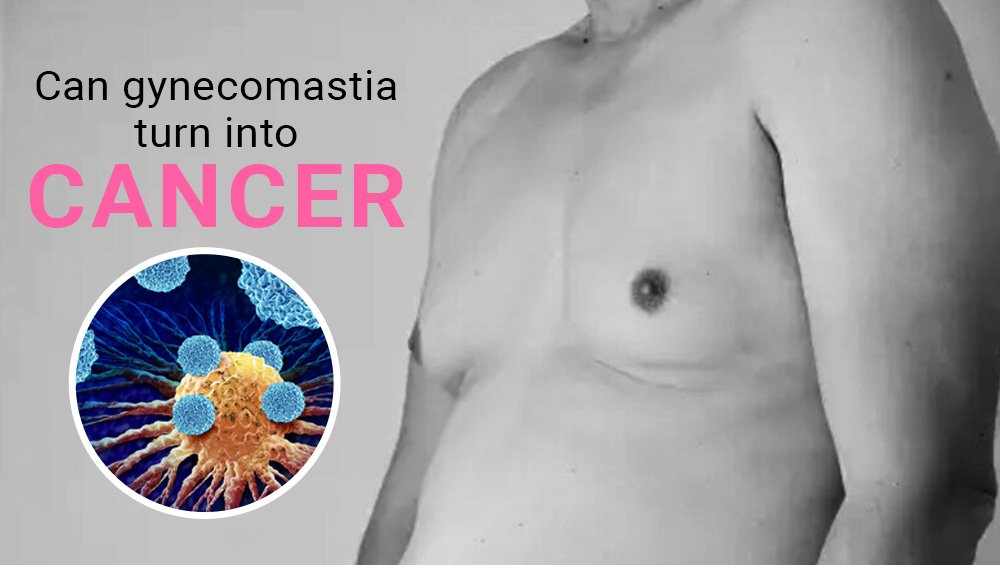
When they see that their breasts are getting fatter or there is something like a lump in their chest, many men get concerned or even frightened. The very first thought that pops up is, "Can gynecomastia turn into cancer?" This is a common fear, the more so because changes in the breasts are usually associated with women. The answer is, however, clear and comforting: gynecomastia is a non-cancerous (benign) state and will not lead to cancer. But there is a reason for the mix-up: some hormonal or medical conditions related to gyno in men might also raise the risk of gynecomastia male breast cancer, thus, the risk of gynecomastia.
This blog will make it easier for you to get the difference, the risk factors, and when it is time for a medical check-up.
What Is Gynecomastia?
Gynecomastia is a term in medicine that refers to the growth of tissue around the breasts in males or glandular breast tissue in men. It usually occurs because of an imbalance in the hormones, wherein the estrogen level is higher than testosterone. It can affect either one or both breasts and is usually manifested as the appearance of a lump that is soft or rubbery beneath the nipple. Many men discover it out of the blue and become uneasy, but gyno in men is really quite frequent.
Gynecomastia is often mistaken for chest fat, whereas breast enlargement due to fat is termed pseudogynecomastia. Gynecomastia can occur in puberty, the adult stage, and old age when there are natural changes in hormones. In most cases, it is not harmful, which is why the commonly asked question about gynecomastia is gynecomastia bad?. From the medical point of view, it is not usually dangerous, but it is very important to have the medical evaluation done properly to eliminate the possibility of any underlying health issues.
Can Gynecomastia Turn into Cancer?
Understanding gynecomastia is crucial as it is not cancer and will never become one. The question “Can gynecomastia turn into cancer?” is asked over and over again by men. The answer remains no. Gynecomastia is a condition that results from hormonal fluctuations in the body and leads to an increase in breast tissue that is completely harmless (benign). Cancer, however, grows in a cascade of unhealthy ways and has a totally different behavior pattern.
There are a few medical conditions that trigger the gynecomastia syndrome, such as liver conditions or hormonal imbalances can increase the chance of the development of breast cancer in men. But, this doesn't suggest that the tumor caused by the gynecomastia. It merely indicates the necessity for frequent doctor visits and checkups for the early detection and timely treatment of any serious issue.
Differentiating Between Gynecomastia and Male Breast Cancer
The distinction between gynecomastia and men's breast cancer can ease the stress associated with both conditions and can lead to immediate medical treatment.
Gynecomastia is usually viewed as nipple-like lumps. The lumps usually appear soft or rubbery in sensation, and can be sensitive and painful, and can often be removed during the examination.
In contrast, breast cancer in men is typically associated with a hard lump that is mostly not painful. It may also be located at a distance from the nipple, have a firm feel, and an irregular outline. Skin dimpling, inward nipple retraction, bloody discharge, or sores on the skin may be other symptoms that warn of the disease.
It is, however, complicated to distinguish the two cases by yourself; consequently, any new or unusual breast lump should be checked by a doctor to rule out the possibility of gynecomastia or male breast cancer.
Is Gyno Permanent? Causes and When to Worry
A frequent question asked by men is gyno permanent? The answer is contingent on the age and the reason. Gynecomastia that is caused by puberty often heals by itself. In adult males, persistent gynecomastia is likely to disappear without treatment.
The causes are hormone imbalance, certain medications, such as kidney or liver disease, thyroid issues, drinking, and steroid use. In these cases, treating the root problem is essential.
What is the danger of gynecomastia? Most of the time, not. However, immediate medical attention is required if there's an increase in size, a single lump, skin change and discharge from the nipple, or a swelling in the armpit.
Diagnosis and Treatment Options
A patient will undergo a physical examination, receive a medical history review, and undergo blood tests to identify the levels of hormones and the functioning of the organs as a part of the diagnosis. If needed, imaging tests like ultrasound or mammography may be suggested.
The treatment is determined by the reason for the problem. Discontinuation of some medications might be of help. Cases that are still there after treatment may call for surgery. In such cases when cancer is suspected, an oncologist's advice is a must. Early assessment guarantees security and tranquility.
Seeking Expert Care in Gurgaon
If you experience changes in your breast, visiting the best medical oncologist in Gurgaon is necessary to eliminate the possibility of cancer. Although surgeons for cosmetics perform operations for the non-cancerous condition of gynecomastia, oncologists are in charge of dealing with doubts or certainties of cancer. Getting the right expert implies precise discovery and prompt treatment.
Conclusion
To sum up, gynecomastia does not turn into cancer. It is the case that in most instances, it is a benign condition. Nevertheless, it is always advisable to have a doctor's consultation, not only to be sure that nothing serious has happened but also to have your mind.
If you require professional advice, Dr. Pooja Babbar, the best medical oncologist located in Gurgaon with experience of more than 15 years, is available to assist. She is renowned as a specialist who can simplify things, as well as for her gentle manner and her approach to patient-centered treatment. Getting medical advice before you need it can help you make the right decisions in confidence.


